When drivers think about vehicle safety, their minds typically turn to airbags, seatbelts, anti-lock brakes, and electronic stability control. These systems are undeniably important. Yet, there is another category of components that operates silently beneath every journey—automotive rubber parts—and their role in safety is just as critical.
From the bushings that locate your suspension to the engine mounts that isolate vibration and the seals that contain vital fluids, rubber components are everywhere in a modern vehicle. But not all rubber parts are created equal. The difference between a high-quality, precision-engineered component and a low-grade alternative can mean the difference between reliable performance and premature failure—sometimes with serious safety consequences.
This guide explores why rubber component quality matters for vehicle safety, how manufacturing quality differentiates supplier reliability, the specific safety impact of suspension and engine mounts, and why high-quality bushings and seals are crucial for longevity.
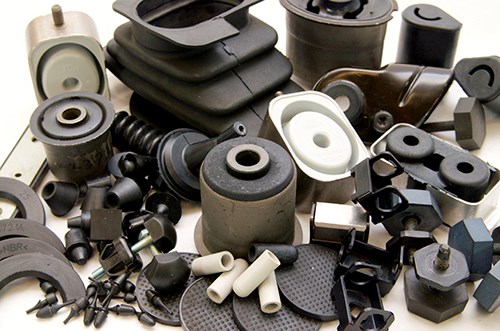
1. How Does Rubber Component Criticality Impact Vehicle Safety?
Every rubber component in a vehicle serves a specific purpose. When that component fails—whether through cracking, tearing, bond separation, or compression set—the consequences ripple through the system.
The Criticality Spectrum:
| Criticality Level | Components | Safety Impact of Failure |
|---|---|---|
| Safety-Critical | Brake system seals, suspension bushings, control arms, steering couplers | Direct loss of control; increased stopping distances; unpredictable handling |
| Operationally Critical | Engine mounts, transmission mounts, shock absorber bushings | Excessive vibration; component misalignment; secondary damage |
| Comfort-Critical | Body mounts, exhaust isolators, HVAC seals | NVH increase; cabin noise; reduced comfort (not directly safety-threatening) |
How Rubber Components Fail:
Understanding failure modes helps explain why quality matters:
Debonding: The rubber separates from the metal inner sleeve or outer shell. In a control arm bushing, debonding allows uncontrolled suspension movement, altering wheel alignment and compromising handling during emergency maneuvers.
Cracking and Dry Rot: Surface cracks allow contaminants to penetrate the rubber, accelerating degradation. A cracked engine mount may still function for a time, but its ability to manage engine torque under hard acceleration is compromised.
Compression Set: The rubber loses its ability to return to its original shape after being compressed. This reduces preload and allows excessive movement, leading to clunking, vibration, and misalignment.
Swelling: Chemical contamination (typically from oil or fluid leaks) causes the rubber to swell, softening it and reducing its stiffness. Swollen bushings no longer provide precise suspension control.
The Safety Equation:
A vehicle's safety systems are designed around the assumption that all components—including rubber parts—perform within their design specifications. When a rubber component fails, it alters the vehicle's dynamics in ways the driver may not anticipate. A worn control arm bushing that allows the suspension to shift during emergency braking increases stopping distance. A failed engine mount that allows excessive engine movement during evasive steering can strain steering components. Quality rubber parts maintain their performance throughout their intended service life, ensuring that safety systems work as designed when they are needed most.
2. Why Does Manufacturing Quality Differentiate Supplier Reliability?
Not all rubber components are manufactured to the same standards. The difference between a component that lasts 100,000 miles and one that fails at 30,000 miles is determined long before the part reaches a vehicle—it is determined in the compounding room, the molding press, and the quality laboratory.
Key Manufacturing Quality Factors:
| Factor | High-Quality Manufacturer | Low-Quality Manufacturer |
|---|---|---|
| Rubber Compounding | Precise formulations with appropriate fillers, antioxidants, and curing agents | Inconsistent mixes; cheap fillers; inadequate anti-degradants |
| Rubber-to-Metal Bonding | Advanced surface preparation (abrasion, cleaning, chemical treatment); proprietary bonding agents | Minimal surface preparation; generic bonding agents |
| Molding Process | Precision tooling; controlled temperature and pressure; consistent cure times | Worn tooling; inconsistent process parameters |
| Quality Control | Statistical process control; in-process inspection; final validation testing | Minimal inspection; high tolerance for defects |
| Certification | IATF16949, ISO 9001, customer-specific requirements | No certification or generic ISO only |
3. What Is the Safety Impact of Rubber Suspension and Engine Mounts?
Suspension and engine mounts are among the most safety-critical rubber components in any vehicle. Their failure directly affects vehicle control, stability, and predictability.
Suspension Bushings: The Hidden Safety Component
Suspension bushings are installed at every pivot point in the suspension system—control arms, trailing arms, sway bars, and shock absorbers. Their job is to provide controlled flexibility while maintaining precise wheel geometry.
When suspension bushings fail:
| Consequence | Safety Impact |
|---|---|
| Altered camber angle | Reduced tire contact patch during cornering; increased stopping distance |
| Aligned toe angle | Unstable straight-line tracking; unpredictable steering response |
| Excessive caster variation | Steering wander; reduced self-centering |
| Suspension geometry shift under load | Loss of control during emergency maneuvers |
Consider an emergency lane-change maneuver at highway speed. The suspension bushings are responsible for keeping the wheels precisely where the geometry requires them to be. Worn bushings allow the control arms to shift under the high lateral loads of an evasive maneuver, changing the toe and camber angles dynamically. The result is a vehicle that does not respond predictably to steering inputs precisely when predictable response is most critical.
Engine Mounts: More Than Comfort
Engine mounts are often thought of as comfort components—and they certainly contribute to a smooth, quiet ride. But their safety role is equally important.
When engine mounts fail:
| Consequence | Safety Impact |
|---|---|
| Excessive engine movement under torque | Shifter movement (manual transmissions); throttle cable binding; steering column interference |
| Drivetrain misalignment | CV joint binding; axle failure risk; transmission damage |
| Loss of torque reaction control | Reduced traction under acceleration; unexpected vehicle yaw |
Under hard acceleration—merging onto a highway or pulling into traffic—the engine rotates in response to torque. Engine mounts are designed to control this rotation. A failed mount allows excessive movement, which can cause the engine to contact the steering column, bind the throttle cable, or strain the axles. In extreme cases, a broken engine mount can allow the engine to shift so far that the driver loses steering or throttle control.
4. Why Are High-Quality Bushings and Seals Crucial for Longevity?
While safety is the highest priority, longevity and reliability are also essential. A component that fails prematurely not only inconveniences the vehicle owner but also increases the risk that failure occurs at an inopportune moment—on a dark highway in the rain, during an emergency maneuver, or far from repair facilities.
The Cost of Premature Failure:
| Failure Scenario | Direct Cost | Potential Safety Cost |
|---|---|---|
| Worn control arm bushing | Control arm replacement + alignment | Reduced handling precision |
| Failed engine mount | Mount replacement + possible accessory damage | Engine movement affecting controls |
| Deteriorated sway bar bushing | Bushing or link replacement | Increased body roll; reduced stability |
| Leaking seal | Fluid loss + component replacement | Fluid contamination of brakes or tires |
5. Conclusion
Automotive rubber parts are not commodities to be selected on price alone. They are precision-engineered components that directly impact vehicle safety, handling, and longevity. The difference between a high-quality component and a low-grade alternative is not theoretical—it is measured in miles of service, degrees of handling precision, and feet of stopping distance.
From the bushings that maintain wheel alignment during emergency maneuvers to the engine mounts that control powertrain movement under hard acceleration, quality matters. It matters in the rubber compound formulation, in the rubber-to-metal bonding process, in the manufacturing certifications, and in the final validation testing.
For vehicle owners, selecting quality components means investing in safety. For repair professionals, specifying quality components means standing behind your work. For manufacturers, partnering with quality suppliers means building vehicles that perform as designed throughout their service life.
When it comes to automotive rubber parts, safety is not negotiable—and neither is quality.
About GJBUSH
GJBUSH is a professional developer and manufacturer of rubber and metal bonding products with a legacy of excellence dating back to 1998. The company combines extensive research and development experience with advanced manufacturing capabilities, offering both forward development (designing from engineering specifications) and reverse development (analyzing customer samples to recreate drawings and material specifications). Whether customers provide samples or detailed engineering drawings, GJBUSH delivers precision-engineered solutions tailored to specific application requirements.
Operating from a state-of-the-art 27,000-square-meter facility that includes a dedicated NVH (Noise, Vibration, and Harshness) laboratory, GJBUSH maintains a fully integrated production chain. From the initial cutting of metal pipes to the final molding of finished products, every step is controlled in-house to ensure consistent quality and precise tolerances.
Adhering strictly to SGS IATF16949 production standards, GJBUSH guarantees OEM-level product quality across its extensive product range. While the company is renowned for automotive rubber shock-absorbing products—including bushings, top rubbers, and control arms—its expertise extends to agricultural machinery, home appliances, new energy vehicles, rail trains, construction equipment, and industrial applications.